What is a portable sink rental and how does it work?
A portable sink is a self-contained unit: a fresh water tank, a pump, a basin and a wastewater tank underneath, all in one frame. No hookup to a building. Fill the fresh tank, and the pump gives you running water at the faucet until it runs dry or the wastewater tank fills. Some units heat water for warm-water washing, which matters if you are running a hot water portable sink for a food booth or a crew that needs more than a cold rinse. Soap and towels have to come with it too. Under 29 CFR 1910.141(d)(2), washing facilities need soap and a way to dry hands, and a sanitizer bottle sitting next to the basin does not satisfy that. We treat every unit like it has to meet that standard, not just look like it does. For sites already running handwashing station rental setups, a portable sink is usually the next add for anyone who needs a real basin instead of a foot-pump trough. Pair it with a portable toilet rental block and you have covered both ends of a jobsite's sanitation needs without touching the building's water line.
Can I use a portable sink for hair washing or camping?
Yes. A portable sink for hair washing works fine if the basin is deep enough and the water is warm, and that is why some renters ask specifically for a hot water portable sink rather than the cold-tank standard. Campers use the same unit as a portable sink to wash hair at a site with no spigot, and it doubles as a dish and hand station for a family or crew. For a short camping trip near Cathedral City, a small camping portable sink with a 5 to 7 gallon tank covers a weekend easily. Larger portable sink water tanks, in the 15 to 20 gallon range, make more sense for a crew of eight to ten washing up between shifts. If you are staging near Palm Springs, 7.1 miles southwest, or out toward Rancho Mirage, 7.3 miles south, delivery timing works the same either direction. Anyone stacking gear for an extended stay should also look at storage container rental options to keep supplies dry between refills.
Why do jobsites and events need a portable sink station?
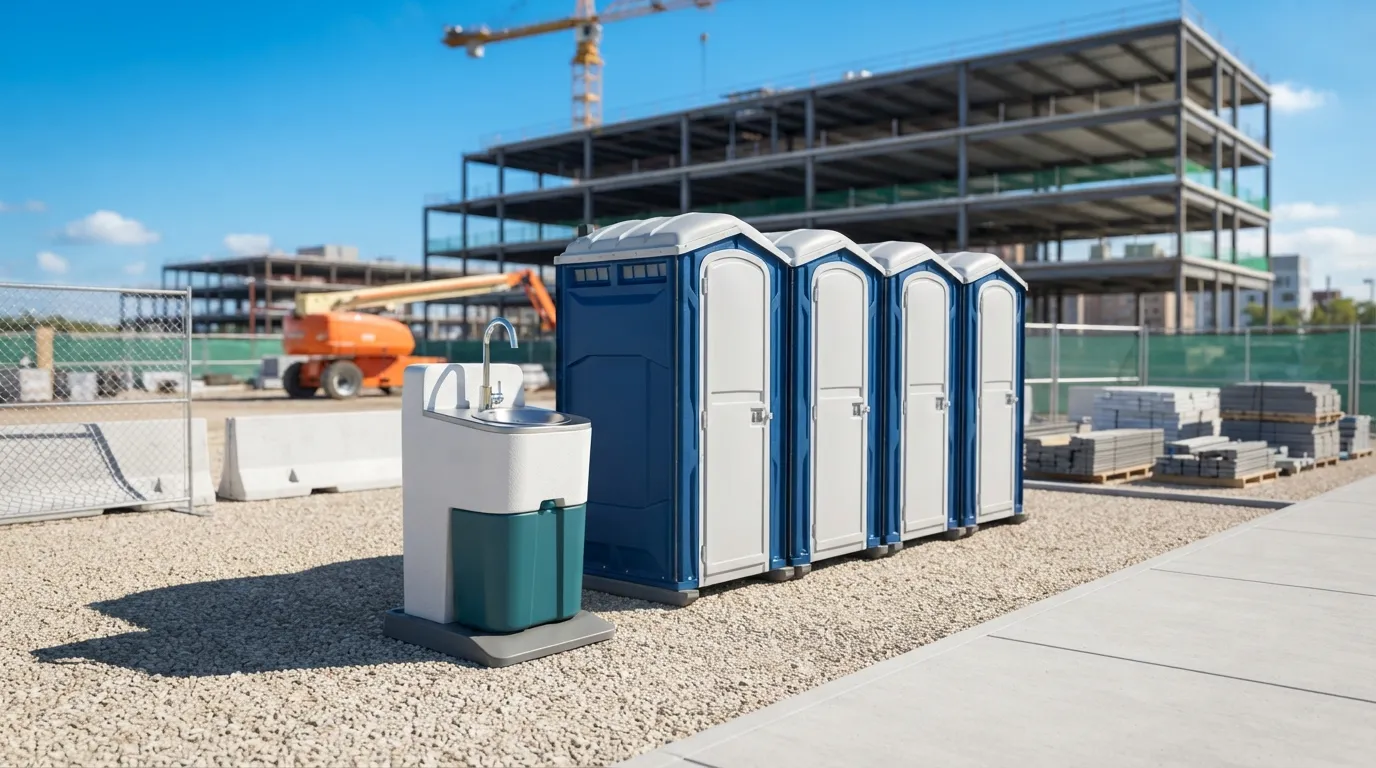
Because a toilet without a place to wash hands does not meet the standard crews are held to. OSHA 1926.51(c) sets toilet counts by crew size on construction sites, and pairing that with a wash station is standard practice, not an extra. If your crew is spraying paint, coatings, herbicides or insecticides, OSHA 1926.51(f)(1) requires washing facilities for that specific exposure, and a sink station on site covers it. Event organizers run into the same logic. A food vendor at a Cathedral City street fair needs a sink close by, and a wedding site booking a wedding restroom rental usually adds a sink station for the catering tent. Construction crews leaning on construction site services for the full package, fencing to dumpsters, treat the sink as part of the same order, not a separate call. Farm crews doing hand labor fall under OSHA 1928.110, which calls for potable water, toilets, and handwashing within a quarter mile walk of where people are working, so a sink station placed at the right spot on a large parcel actually matters for compliance, not just convenience. Check our farm and agricultural restrooms page if that is your situation.
Where should a portable sink station go on site?
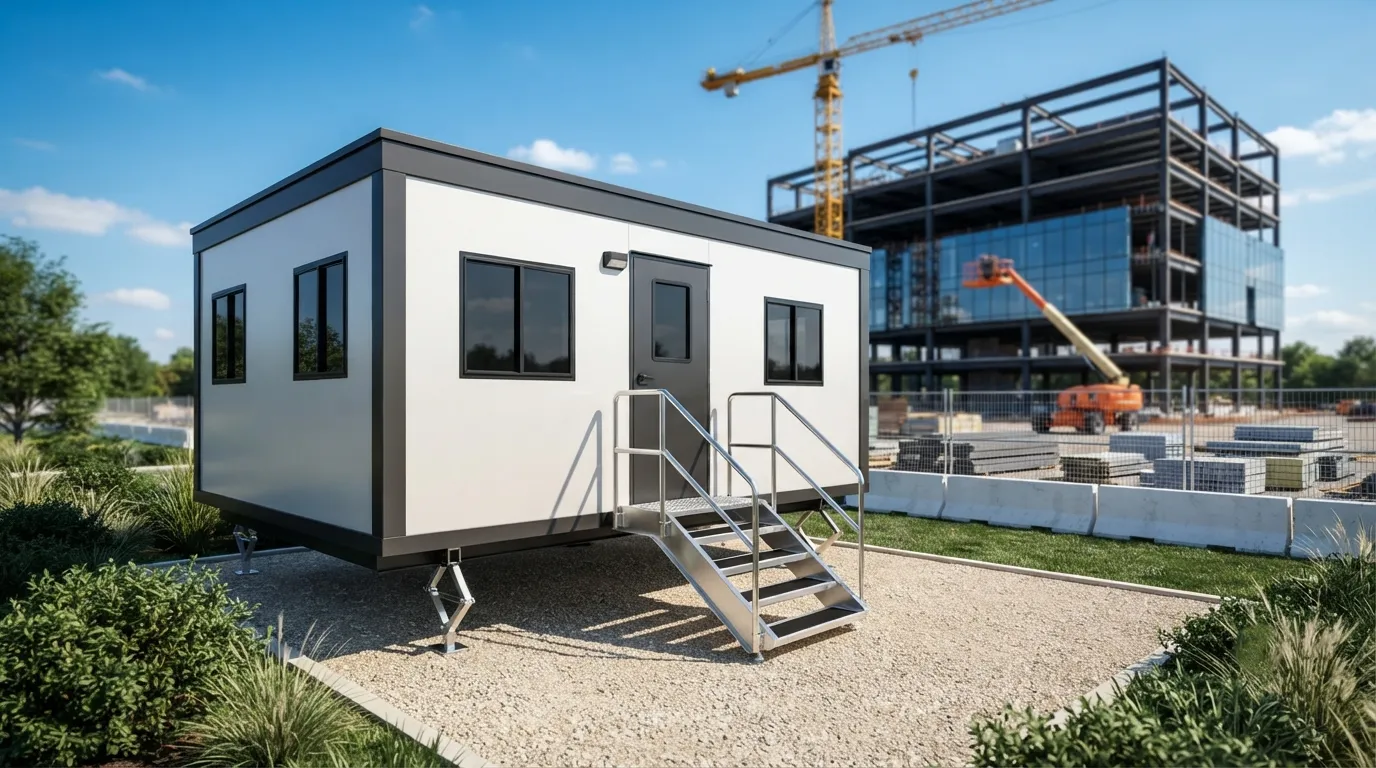
Put it next to the toilets, not far from the work area, and on ground that can handle foot traffic and spilled water without turning to mud. ADA Standards section 302.1 calls for floor and ground surfaces that are stable, firm and slip resistant, and that applies to the pad under a sink station just like it applies to a restroom pad. If you're also placing an accessible toilet, ADA Standards section 304.3.1 calls for a 60 inch turning circle nearby, so leave that clearance when you're laying out the pad. Our ADA accessible porta potty page covers those clearances in more depth. Delivery trucks need room too. If a sink station is going in alongside a roll-off, plan on roughly 60 feet of straight clearance behind the truck for the drop, same as any roll-off dumpster rental delivery in Cathedral City. For events with heavier foot traffic, check the porta potty placement guide before you finalize the layout, and if you're unsure how many stations a crowd size needs, how many porta potties do I need walks through the math.
How much does a portable sink rental cost?
Pricing runs with your rental length and setup. A standard unit typically runs in the range published on our porta potty rental cost page, and sink stations track close to those bands. Ask about weekly and monthly rates if the job runs long, since per-day pricing adds up fast on multi-week jobs.
Do portable sinks need a water and sewer hookup?
No. That is the entire point of a portable sink rental. The unit carries its own fresh water tank and its own wastewater tank, so it works on a bare lot, a construction site, or a campsite with no utilities at all.
How often does a portable sink need to be serviced?
Depends on use. A small camping unit might just need a refill after a weekend. A busy jobsite sink gets serviced closer to the same interval as the toilets nearby, and ANSI/PSAI Z4.3 sets a weekly baseline service interval for up to 10 users over a 40 hour week.
Can a portable sink run hot water?
Some units can. A hot water portable sink uses a small heater or a pre-heated tank fill, which matters for hand washing after handling food, paint or chemicals. Ask when you book, since not every unit on a lot has heating built in.
What size water tank do I need?
Depends on headcount and how long the unit sits between refills. A short camping trip is fine with 5 to 7 gallons. A jobsite crew washing up in shifts needs a bigger tank, and our portable restroom rental team can size it against your crew count.
Next step
Get a delivery date
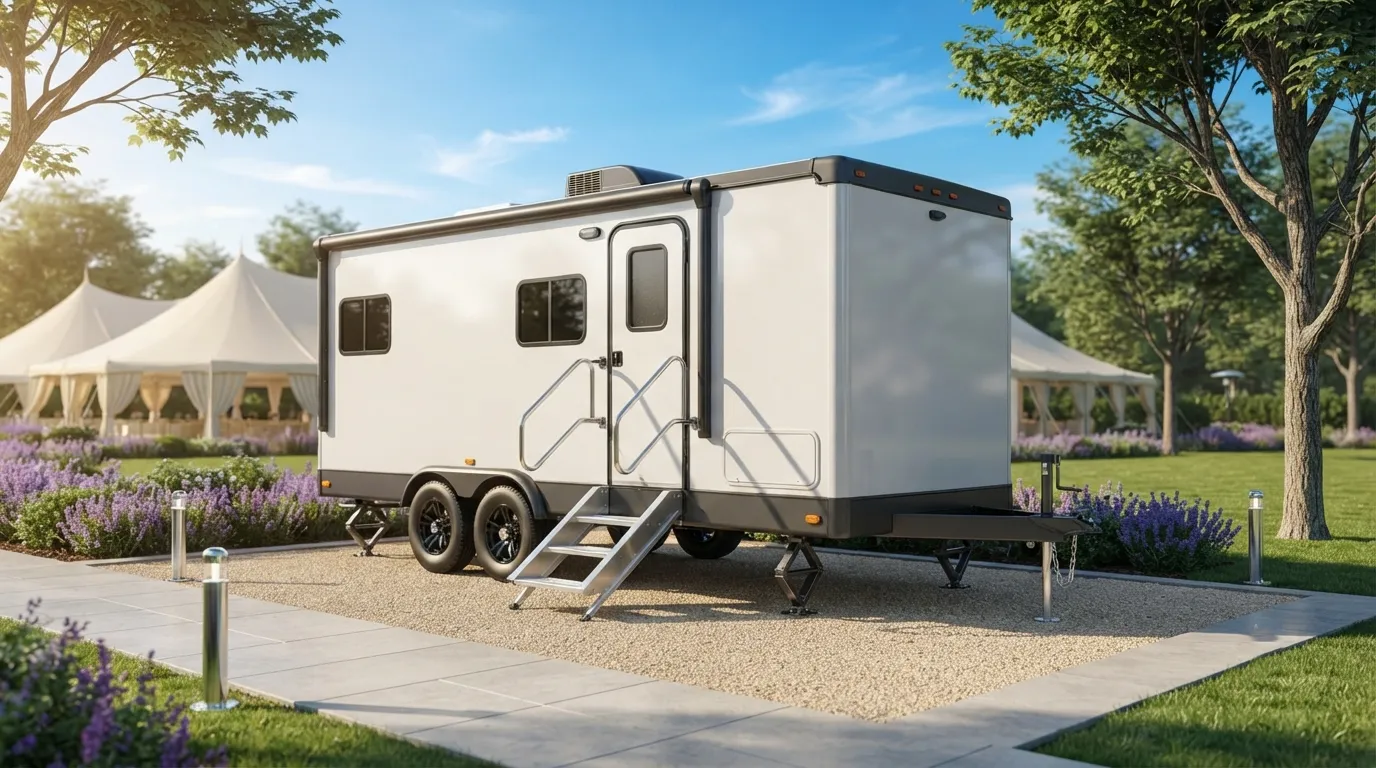
Tell us the address, the dates and the headcount. We size the order and confirm the route.